CONTACT US
+8615030171059



High Performance 16 mm mdf board price and EB Cured Panel Guide
When sourcing high-performance materials for modern interior architecture, the balance between structural stability and surface aesthetics is paramount. For those evaluating the 16 mm mdf board price, the value proposition extends far beyond the raw cost per sheet; it encompasses the long-term durability, emission safety, and the sophistication of the surface finish. In the contemporary furniture market, standard medium-density fiberboard is often replaced by advanced engineered panels that can withstand high-traffic commercial use while maintaining a premium visual appeal.
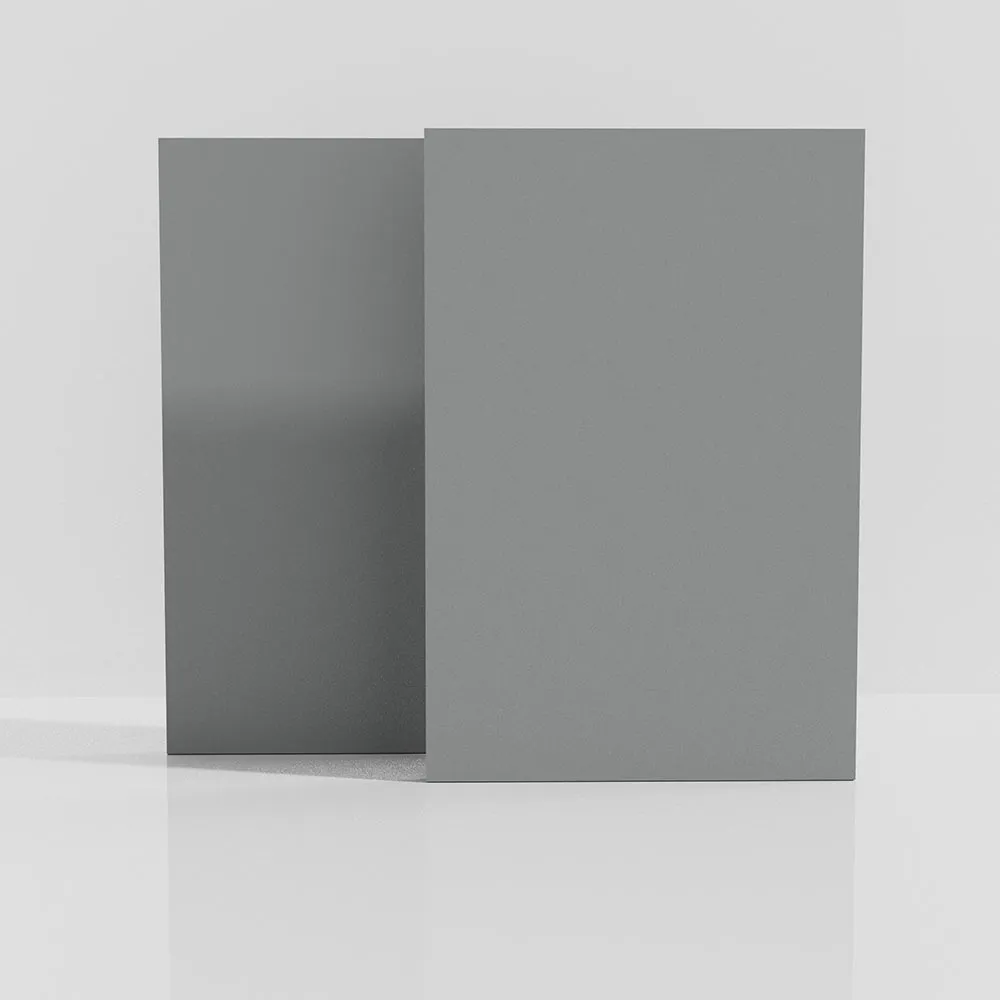
The "Irish Grey" decorative panel represents a shift toward aerospace-grade manufacturing in the woodworking industry. By integrating Electron Beam (EB) curing technology, these panels move past the limitations of traditional thermal curing, offering a surface that is not only visually consistent but biologically safe. Whether for luxury residential cabinetry or medical-grade furnishings, selecting a panel with verified antimicrobial properties and zero-formaldehyde emissions is now a critical requirement for health-conscious procurement.

Understanding the Technical Evolution of High-Density Decorative Panels
The transition from traditional thermal-pressed panels to Electron Beam (EB) cured technology marks a significant leap in material science. Unlike conventional processes that rely on heat to dry coatings, EB curing utilizes a high-energy electron accelerator. This process "bombards" the liquid coating on the surface of the material, triggering an instant polymerization. The result is a three-dimensional interlocked network that fundamentally transforms the surface properties of the panel.
This technical approach resolves several industry pain points, most notably the inconsistency in curing uniformity and the tendency for thermal coatings to degrade over time. For a 16 mm thickness, the structural integrity of the core combined with an EB-cured surface provides an unmatched ratio of rigidity to surface hardness. This ensures that the panels do not warp under environmental stress while maintaining a finish that is resistant to common industrial pollutants and mechanical wear.
- Instant Polymerization: Eliminates the need for lengthy oven-drying cycles.
- Molecular Cross-linking: Creates a denser surface layer for superior scratch resistance.
- Color Purity: Prevents the yellowing often associated with heat-cured resins.

Surface Performance and Environmental Safety Standards
In high-end interior projects, the surface must be as functional as it is aesthetic. The Irish Grey series utilizes EB technology to achieve a surface that is highly resistant to fingerprints, tarnish, and corrosion. This is particularly vital for commercial environments where daily maintenance is a challenge. The resulting finish is not just a coating but a chemically bonded shield that meets ASTM D4060 wear resistance standards, ensuring the panel retains its look even in high-traffic zones.
Beyond aesthetics, the health impact of interior panels is a primary concern for architects. By removing the benzene and formaldehyde emissions typical of traditional adhesives, these panels achieve food-grade material compliance. This makes them suitable for pediatric spaces (GB/T 35607) and specialized medical environments (ISO 18562). The absence of volatile organic compounds (VOCs) ensures that the indoor air quality is preserved, aligning with LEED-compliant design goals for sustainable building.
Strategic Application Scenarios for Industrial and Residential Use
The versatility of the Irish Grey finish allows it to be deployed across a wide spectrum of applications. In residential settings, it is ideal for kitchen cabinetry and wardrobe panels where moisture resistance and ease of cleaning are required. The soft-touch yet durable surface provides a modern, minimalist feel that complements contemporary architectural styles while resisting the typical scratches associated with domestic use.
In commercial and institutional sectors, the requirements are more stringent. For medical clinics or laboratories, the antimicrobial sustainability of EB panels provides an added layer of hygiene. In luxury retail or corporate office fit-outs, the ultra-matte or high-gloss options allow for a cohesive design language that does not compromise on performance. The 16 mm thickness provides sufficient screw-holding capacity and structural support for larger shelving units and wall cladding.
- Medical Grade: Compliant with ISO 18562 for safe environments.
- Luxury Retail: High scratch and fingerprint resistance for display units.
- Sustainable Housing: Zero-formaldehyde for healthy living spaces.
Evaluation Matrix for High-Performance Decorative Panels
| Performance Metric | Standard Thermal MDF | EB Cured Panel | Application Suitability |
|---|---|---|---|
| Surface Hardness | Medium | Ultra-High | High-Traffic Areas |
| Emission Level | Varies (E1/E0) | Formaldehyde-Free | Pediatric/Medical |
| Curing Uniformity | Variable | 99% Consistent | Large Scale Projects |
| Chemical Resistance | Moderate | High | Laboratory/Kitchen |
| Environmental Cert. | Basic | ISO 14001/LEED | Green Building |
Procurement Considerations and Supplier Capability
When analyzing the 16 mm mdf board price, procurement managers must evaluate the supplier's manufacturing infrastructure. A facility that integrates intelligent manufacturing, such as the 50,000 sqm hub utilizing Wemhöner automated lines, ensures millimeter-level precision. This reduces material waste and guarantees that every panel in a mass production run (up to 15,000+ panels daily) is identical in quality and dimension.
Reliability in delivery and quality consistency is often linked to the company's certification portfolio. Adherence to ISO 9001 for quality management and ISO 45001 for occupational health indicates a mature production system. Furthermore, the ability to deploy proprietary technology, such as the strategic partnership with the China National Nuclear Corporation for EB equipment, creates a technical barrier that ensures the end product is superior to generic market offerings.
Future Trends in Eco-Efficient Panel Manufacturing
The future of the panel industry is moving toward "Precision Health" and "Zero-Emission" manufacturing. The integration of aerospace-grade electron beam technology is a primary driver of this trend, as it replaces energy-intensive thermal processes with high-speed, precise curing. This not only reduces the carbon footprint of the production facility but also eliminates the toxic by-products associated with traditional resins.
We are seeing an increased demand for "functional aesthetics"—where a panel is expected to be antimicrobial, anti-static, and ultra-durable without relying on heavy chemical additives. As building codes become stricter regarding indoor air quality, the adoption of food-grade, benzene-free materials will become the standard rather than a premium option. The evolution of the Irish Grey series reflects this shift toward sustainable, high-performance architectural surfaces.
Frequently Asked Questions on EB Cured Panels
What makes EB curing superior to traditional thermal curing?
EB curing uses high-energy electron beams to trigger instant polymerization of the coating. This avoids the heat-induced degradation of colors, ensures 99% curing uniformity, and creates a much harder, more scratch-resistant surface compared to thermal processes.
Are these panels safe for use in children's hospitals or nurseries?
Yes, the EB panels are certified for pediatric spaces (GB/T 35607) and medical environments (ISO 18562). They are formaldehyde-free and benzene-free, meeting food-grade material safety standards.
How does the surface of the Irish Grey panel handle fingerprints and smudges?
The EB curing process creates a unique three-dimensional interlocked network on the surface, which significantly enhances fingerprint and tarnish resistance, making it ideal for high-touch commercial surfaces.
Is a 16 mm thickness sufficient for structural cabinetry?
Yes, 16 mm is a standard industrial thickness that provides a strong balance between weight and structural rigidity, offering excellent screw-holding capacity for most cabinetry and shelving applications.
What certifications should I look for when sourcing eco-friendly panels?
Look for ISO 9001 (Quality), ISO 14001 (Environment), and specific emission certifications like GB/T 35607 or LEED compliance to ensure the materials meet health and safety standards.
Can these panels be customized for large-scale commercial projects?
Yes, with intelligent manufacturing hubs and automated production lines, manufacturers can provide high-volume delivery (15,000+ panels daily) with millimeter-level precision for consistent project results.
Technical References and Standards
- ISO 14001 Environmental Management Systems
- ASTM D4060 Standard Test Method for Abrasion Resistance
- LEED v4.1 Building Design and Construction Guide
- WHO Guidelines on Indoor Air Quality and Formaldehyde
For professionals seeking to optimize their material procurement, focusing on the intersection of technical curing methods and environmental certifications is key. The Irish Grey EB panel offers a future-proof solution for those who refuse to compromise between luxury aesthetics and rigorous safety standards.
Related Industry Insights