Add: No.8 Xinxing Street, North Zone, Zhengding High-tech Industrial Development Zone, Hebei, China

CONTACT US

+8615030171059
221231instagram-fill1251 search

High-Performance Veneer MDF Board Solutions for Cameroon's Interiors

Integrating aerospace-grade EB curing technology to deliver durable, eco-friendly decorative panels tailored for the unique architectural demands of Africa - Cameroon.

Advanced Surface Engineering for Commercial and Residential Spaces

Providing Cameroon's designers and developers with high-hardness, antimicrobial, and formaldehyde-free panels that resist tropical humidity and wear.

Navigating the Decorative Panel Market in Africa - Cameroon

Analyzing regional procurement patterns and material challenges in the Central African wood processing sector.

The construction and interior design landscape in Cameroon is characterized by a growing demand for premium finishes that can withstand high humidity and temperature fluctuations. Local developers are increasingly shifting away from traditional raw timber toward engineered solutions like veneer mdf board to achieve a balance between aesthetic luxury and structural stability.

Procurement behavior in the region typically prioritizes long-term durability and ease of maintenance. Due to the environmental conditions, there is a significant need for materials that prevent warping and resist biological degradation. This has created a gap in the market for high-performance coatings that do not rely on toxic thermal curing processes.

A primary pain point for Cameroon's commercial fit-out projects is the inconsistency of surface hardness in imported panels, leading to rapid degradation in high-traffic areas. Additionally, the rising awareness of indoor air quality is driving a shift toward formaldehyde-free materials, especially in pediatric and medical facility developments within urban centers.
The Evolution of Engineered Wood Surfaces

From traditional thermal pressing to the era of Electron Beam (EB) precision curing.

Technological Milestones in Panel Manufacturing

LEGACY ERA — TRADITIONAL THERMAL CURING
The industry relied on heat-based polymerization, which often resulted in inconsistent curing uniformity and the release of volatile organic compounds (VOCs), limiting the panels' use in health-sensitive environments.

MODERN SHIFT — PRECISION AUTOMATION
The introduction of automated decorative lines and heavy laser-aligned presses allowed for millimeter-level precision, significantly increasing the mass production capacity of natural wood veneer sheets.

CURRENT FRONTIER — EB CURING TECHNOLOGY
The deployment of aerospace-grade electron beam curing replaces heat with high-energy electrons, triggering instant cross-linking to create a three-dimensional network. This results in unmatched scratch resistance and a food-grade, formaldehyde-free finish.

Strategic Future Trends

1. Antimicrobial Surface Integration

Driven by global health standards, surfaces are evolving to be inherently antimicrobial, making them ideal for medical environments and public spaces in growing African hubs.

2. Eco-Efficient Manufacturing

The transition toward benzene-free and formaldehyde-free emissions is becoming a mandatory requirement for LEED-compliant commercial projects in Cameroon.

3. Hyper-Realistic Texture Simulation

Advanced curing allows for the creation of ultra-matte and soft-touch finishes that mimic the tactile feel of authentic barn board veneer without the maintenance drawbacks.

Global Industry Perspectives & Regional Outlook

Analyzing the intersection of intelligent manufacturing and sustainable architecture.

⚡
EB Curing Precision
Replacing thermal processes with electron accelerators to ensure 99% curing uniformity and extreme surface hardness.
🤖
Intelligent Scale
Utilizing automated decorative lines and quad-platen presses to maintain consistency across mass production.
💳
Lifecycle Value
Reducing long-term replacement costs through ASTM D4060 wear resistance and tarnish-proof surfaces.
🌱
Health Compliance
Meeting ISO 18562 and GB/T 35607 standards for medical and pediatric environmental safety.

Future Industry Trajectory

Over the next 3–5 years, the decorative panel sector will likely see a surge in "functional aesthetics," where the surface is not just a visual layer but a protective barrier against biological and chemical agents. In Cameroon, this will be driven by the expansion of smart-home industrial parks and the modernization of commercial infrastructure.

While logistics and supply chain volatility remain challenges, the adoption of intelligent manufacturing allows for more reliable delivery schedules. Companies that integrate R&D with large-scale production, such as those utilizing EB technology, are best positioned to mitigate these risks by offering standardized, high-performance products.

Practical Applications in Africa - Cameroon

Tailored deployment of advanced panels across diverse regional environments.

01

Luxury Hotel Fit-outs in Douala

In high-traffic hospitality zones, designers utilize ultra-matte EB panels for wall cladding. These surfaces provide the elegance of wood while offering fingerprint and scratch resistance essential for guest corridors.

02

Corporate Office Hubs in Yaoundé

Executive boardrooms require a professional aesthetic with high durability. High-gloss decorative panels are applied to cabinetry, ensuring a tarnish-free appearance despite heavy daily use.

03

Public Infrastructure & Transit Terminals

For areas requiring extreme hygiene and resilience, antimicrobial EB-cured panels are used. These are paired with industrial components like carbon steel grating for durable floor transitions.

04

Pediatric Clinics and Healthcare Centers

Utilizing ISO 18562 certified formaldehyde-free panels ensures a healthy environment for vulnerable patients. The non-porous surface allows for rigorous chemical cleaning without degradation.

05

Eco-Resorts in Coastal Regions

To combat salt-air corrosion and humidity, moisture-resistant core panels with EB coatings are deployed, providing the rustic look of floor drain trench integration and weather-stable veneers.

Engineering Excellence: The Hebei Bojing Story

A legacy of wood industry expertise evolved through intelligent manufacturing and nuclear-grade technology.

30-Year Legacy

Inherited deep panel expertise from Hebei Tengfei Wood Industry, establishing a foundation of material science and production efficiency.

2021 Expansion

Invested RMB 250 million to establish the 50,000 sqm Tengfei Bojing Intelligent Manufacturing Hub in Zhengding Modern Smart Home Industrial Park.

Strategic Partnership

Collaborated with China National Nuclear Corporation to deploy the nation's first independently developed EB curing equipment.

Technological Leadership

Achieved global leadership in core EB curing technology, enabling aerospace-grade precision in decorative panel surface treatments.

Certification Milestone

Obtained ISO9001, ISO14001, and ISO45001 certifications, ensuring rigorous quality, environmental, and occupational health management.

Comprehensive Panel Solutions for Cameroon's Market

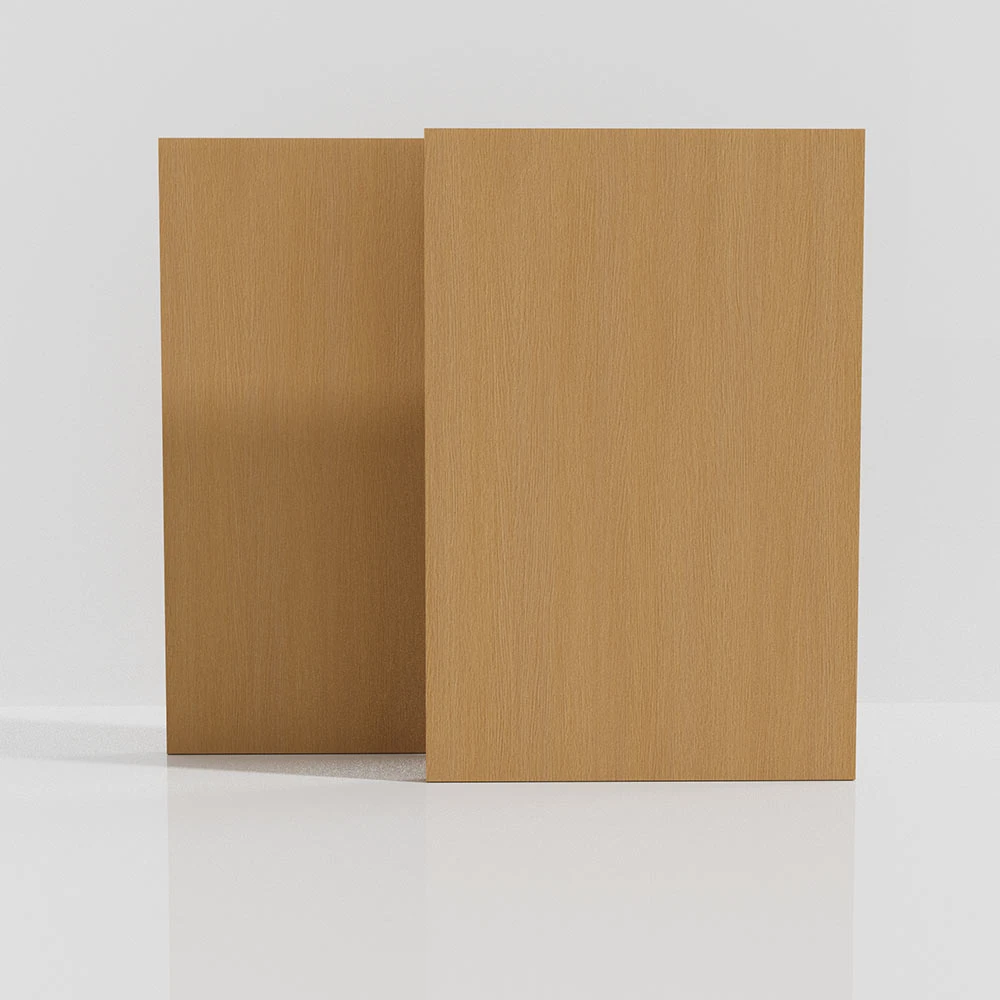
From soft-touch EB panels to high-performance decorative surfaces, engineered for diverse architectural needs.

Africa - Cameroon Procurement & Technical FAQ

Expert answers regarding the selection and implementation of advanced decorative panels.

How do I evaluate the cost-effectiveness of EB panels for a large project in Cameroon?

Evaluation should focus on the total lifecycle cost rather than just the initial purchase price. Because EB panels offer ASTM D4060 wear resistance and tarnish-proof properties, the frequency of replacement is significantly reduced compared to traditional panels, lowering long-term maintenance expenditures for commercial facilities.

What are the installation considerations for veneer MDF boards in high-humidity coastal areas?

In coastal regions of Cameroon, it is critical to use panels with high-performance EB coatings that provide a non-porous seal. This prevents moisture ingress into the MDF core, reducing the risk of swelling. Proper edge-banding and the use of moisture-resistant adhesives are recommended for optimal deployment.

How is the maintenance of EB-cured surfaces handled compared to natural wood?

EB surfaces are significantly easier to maintain than natural wood. They are resistant to fingerprints, scratches, and tarnishing, eliminating the need for frequent waxing or polishing. Simple cleaning with a damp cloth is usually sufficient, which is ideal for busy public environments.

Which panel finish is best for pediatric or medical spaces in Cameroon?

For medical environments, we recommend our certified formaldehyde-free and benzene-free EB panels. These meet ISO 18562 and GB/T 35607 standards, providing an antimicrobial surface that ensures patient safety and complies with health-grade material requirements.

What is the technical difference between EB curing and thermal curing?

Thermal curing uses heat to dry coatings, which can cause unevenness and release VOCs. EB curing uses an electron accelerator to "bombard" the surface with high-energy beams, triggering instant polymerization into a 3D interlocked network. This results in 99% curing uniformity and superior surface hardness.

Are these decorative panels compliant with international green building standards?

Yes, our panels are designed to be LEED-compliant. By eliminating harmful emissions and utilizing energy-efficient EB technology, they support sustainable construction goals for modern architectural projects within Africa - Cameroon.

Request a Technical Assessment for Your Project

Contact our engineering team to receive a detailed product quotation, material samples, and application consultation tailored for the regional requirements of Africa - Cameroon.

Contact Our Experts
tel +8615030171059 tel icon15

If you are interested in our products, you can choose to leave your information here, and we will be in touch with you shortly.