Add: No.8 Xinxing Street, North Zone, Zhengding High-tech Industrial Development Zone, Hebei, China
CONTACT US
+8615030171059



CONTACT US
+8615030171059
Procuring materials for high-end cabinetry and interior joinery often leads to a critical decision point regarding board thickness and core composition. For many furniture manufacturers, the 18mm thickness represents a standard balance between structural rigidity and weight, making the 18mm mdf board price a key metric in project budgeting.
However, focusing solely on the raw cost per sheet often overlooks the total cost of ownership, including waste factors, machining time, and the long-term stability of the finished piece. In the current market, the shift toward engineered cores paired with genuine wood veneers has changed how buyers evaluate value, moving from a "price-per-board" mentality to a "cost-per-component" strategy.
This report analyzes the technical drivers behind MDF pricing, the structural advantages of 18mm specifications, and the critical differences between veneered engineered boards and solid timber alternatives.


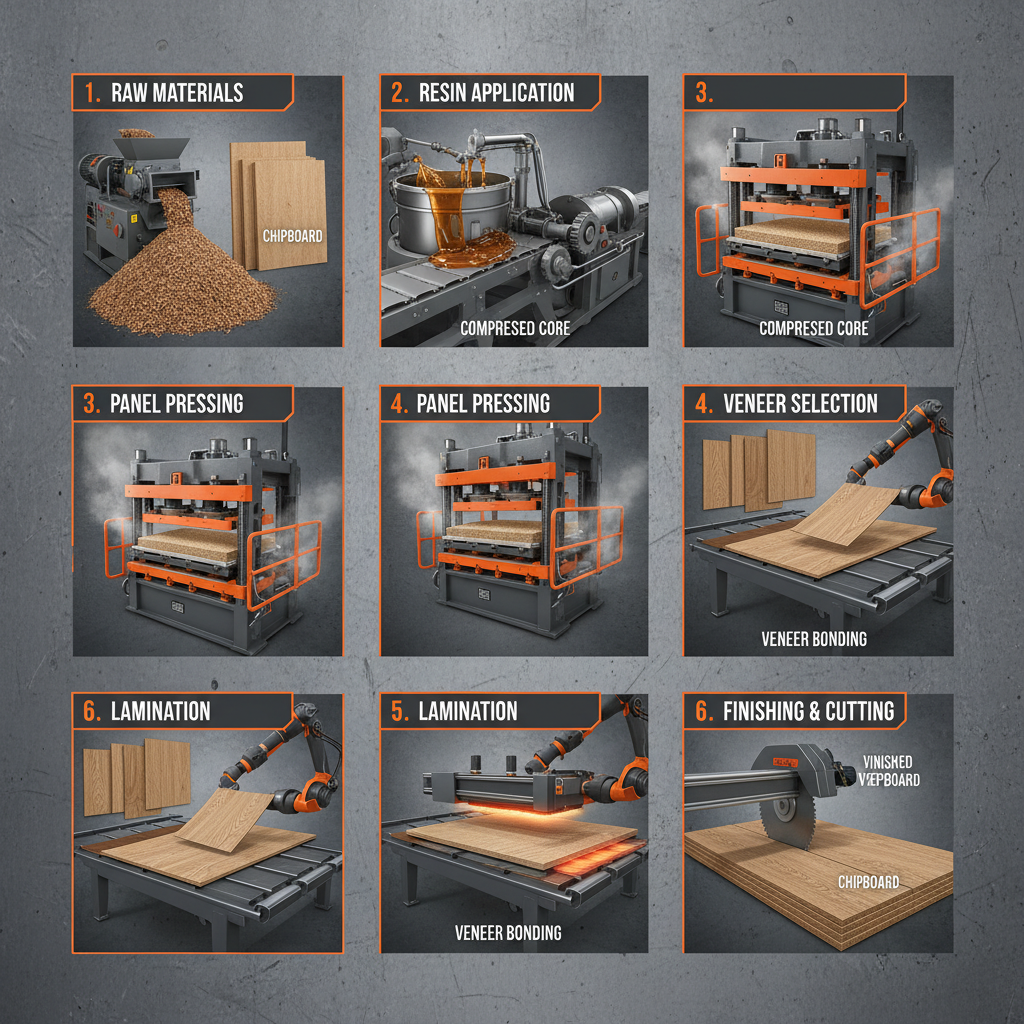
Medium Density Fiberboard (MDF) is engineered by breaking down hardwood or softwood residuals into wood fibers, combining them with wax and a resin binder, and forming them into panels using high temperature and pressure. The 18mm specification is particularly favored because it provides the necessary thickness for secure screw-holding and structural support in cabinet carcasses and shelving.
Unlike plywood, which consists of layered veneers, the 18mm MDF core is homogeneous. This uniformity ensures that the material does not warp as easily as natural wood and allows for clean, sharp edges when routed or machined, which is essential for modern minimalist furniture designs.
The market price of an 18mm panel is not determined by thickness alone but by a combination of resin quality, density grades, and surface treatments. High-density cores offer better load-bearing capabilities but may increase the weight and cost of the final product. Furthermore, the type of adhesive used—whether standard urea-formaldehyde or low-emission alternatives—significantly impacts the certification level and pricing.
Surface specifications add another layer of complexity. For instance, a raw 18mm MDF board is fundamentally different from a Veneer MDF Board. The process of applying a genuine oak veneer requires precise pressure and temperature control to avoid bubbling or telegraphing of the core texture through the thin wood layer.
Advanced curing technologies also play a role. Innovation in EB (Electron Beam) curing, as seen in the production processes at Hebei Bojing Technology, replaces traditional thermal curing with high-energy electron beams. This results in a surface with higher hardness and better scratch resistance, which adds intrinsic value to the panel beyond its basic dimensional costs.
Furniture designers frequently debate the use of oak veneered MDF versus solid oak. While both provide the visual luxury of real wood, their physical behaviors differ. Solid oak is subject to hygroscopic movement, meaning it expands and contracts with humidity changes, requiring larger tolerances in joinery.
Oak veneered MDF panels combine the aesthetic of genuine wood with the dimensional stability of an engineered core, effectively eliminating the warping issues common in solid timber while reducing overall material waste.
From a processing standpoint, veneered panels require careful edge banding and light sanding to avoid penetrating the thin veneer layer. In contrast, solid oak allows for deep carving and repeated sanding. However, for large-scale commercial installations, the consistency of grain pattern available in matched veneers often outweighs the perceived prestige of solid wood.
When evaluating the total project cost, the raw 18mm mdf board price is only one variable. Manufacturers must account for the "yield rate"—the percentage of the board that ends up in the final product versus the scrap pile. Because engineered boards have fewer natural defects than solid timber, the yield is typically higher, reducing the cost per finished unit.
Additionally, the time required for finishing differs. Solid oak requires extensive sanding and multiple coats of sealer to prevent bleed-through. A high-quality veneered panel, especially one processed with EB curing, provides a more uniform surface that accelerates the finishing stage and reduces labor costs.
In residential settings, 18mm veneered panels are predominantly used for wardrobe doors, kitchen cabinet fronts, and built-in shelving. The 18mm thickness provides the necessary structural integrity to support heavy hardware, such as soft-close hinges and drawer slides, without the risk of the material stripping during installation.
For commercial interiors, such as reception desks and office storage units, these panels allow for a coordinated wood-grain appearance across large surfaces. Designers often specify "book matching" or "slip matching" for the veneers to create a mirrored or linear visual flow, which is far easier to achieve with engineered panels than with randomly sourced solid timber planks.
The industry is moving toward "health-first" materials. The adoption of formaldehyde-free resins and benzene-free emissions is no longer optional for projects targeting medical or pediatric environments. This shift is driving the development of more sophisticated binders that maintain the structural strength of the 18mm core while ensuring food-grade safety.
Another emerging trend is the integration of smart coatings. Beyond traditional lacquers, high-performance EB panels are redefining durability. These surfaces offer antimicrobial properties and extreme resistance to fingerprints and corrosion, making them suitable for high-traffic public spaces where maintenance costs are a primary concern.
Furthermore, the digitalization of the supply chain is allowing buyers to specify exact grain patterns and color variations before production. This reduction in uncertainty helps furniture manufacturers optimize their material orders, effectively lowering the impact of the raw 18mm mdf board price on the overall project margin.
Choosing between different panel types requires a balanced assessment of the application environment and the intended lifecycle of the furniture. A decorative wall panel in a dry office environment has entirely different requirements than a cabinet door in a humid kitchen.
Buyers should prioritize the "backing" of the panel. A balanced construction—where both sides are veneered or treated—prevents the board from bowing over time. For components where only one face is visible, a high-quality MDF core with a professional backing is sufficient, provided the edges are correctly sealed.
The following framework provides a relative comparison of material suitability based on common project requirements.
| Requirement | Standard 18mm MDF | Veneered MDF | Solid Oak |
|---|---|---|---|
| Dimensional Stability | High | High | Moderate |
| Visual Luxury | Low (Raw) | High | Very High |
| Processing Speed | Very High | High | Moderate |
| Cost Predictability | High | Moderate | Low |
| Moisture Resistance | Low | Moderate | Moderate |
| Edge Finishing | Simple | Precise | Complex |
Prices are primarily driven by the cost of raw timber residuals, resin chemicals, and energy consumption during the pressing process. Additionally, surface treatments—such as the difference between raw MDF and an EB-cured or veneered finish—can significantly alter the per-sheet cost. Supply chain logistics and regional demand for construction materials also play a role in short-term price fluctuations.
While 18mm is the industry standard for carcasses and shelving due to its strength-to-weight ratio, it may not be optimal for every part. For example, back panels are typically 3mm to 6mm to reduce weight and cost, while heavy-duty worktops may require 25mm or 30mm. Buyers should select thickness based on the load-bearing requirements and the specific joining method used.
Veneered MDF often outperforms solid wood in terms of structural stability because the engineered core does not shrink or swell as dramatically. However, solid wood can be sanded down and refinished multiple times, whereas a veneer can only be sanded lightly. For high-wear surfaces, a high-performance EB coating on MDF can provide superior scratch resistance compared to traditional wood finishes.
Buyers should specify the "face quality," which includes the preferred grain direction (straight vs. cathedral) and the acceptance of natural features like small knots. It is also critical to define the matching method—such as book matching for a mirrored look or slip matching for consistency. Requesting a reference sample before bulk production is the best way to align expectations.
Standard MDF is sensitive to moisture and can swell if exposed to water. For humid areas, buyers should look for moisture-resistant (MR) grade MDF or panels with high-performance EB coatings that seal the surface. Even then, all exposed edges must be perfectly sealed with edge-banding or moisture-proof adhesives to prevent water ingress into the core.
Electron Beam (EB) curing uses high-energy electrons to trigger instant polymerization of coatings, creating a three-dimensional interlocked network. This results in a surface that is significantly harder and more resistant to scratches, fingerprints, and chemicals than traditionally heat-cured panels. It also allows for a more eco-friendly process by reducing the need for volatile organic solvents.
Selecting the right panel involves looking beyond the immediate 18mm mdf board price and evaluating the interplay between core stability, surface durability, and production yield. For most modern interior applications, the combination of a precise engineered core and a genuine wood veneer offers a superior balance of aesthetics and performance.
As the industry shifts toward sustainable and health-conscious materials, the integration of technologies like EB curing and formaldehyde-free resins will become the primary benchmarks for quality. By focusing on technical specifications and long-term stability, manufacturers can ensure a high-end finish that meets both architectural standards and budgetary constraints.