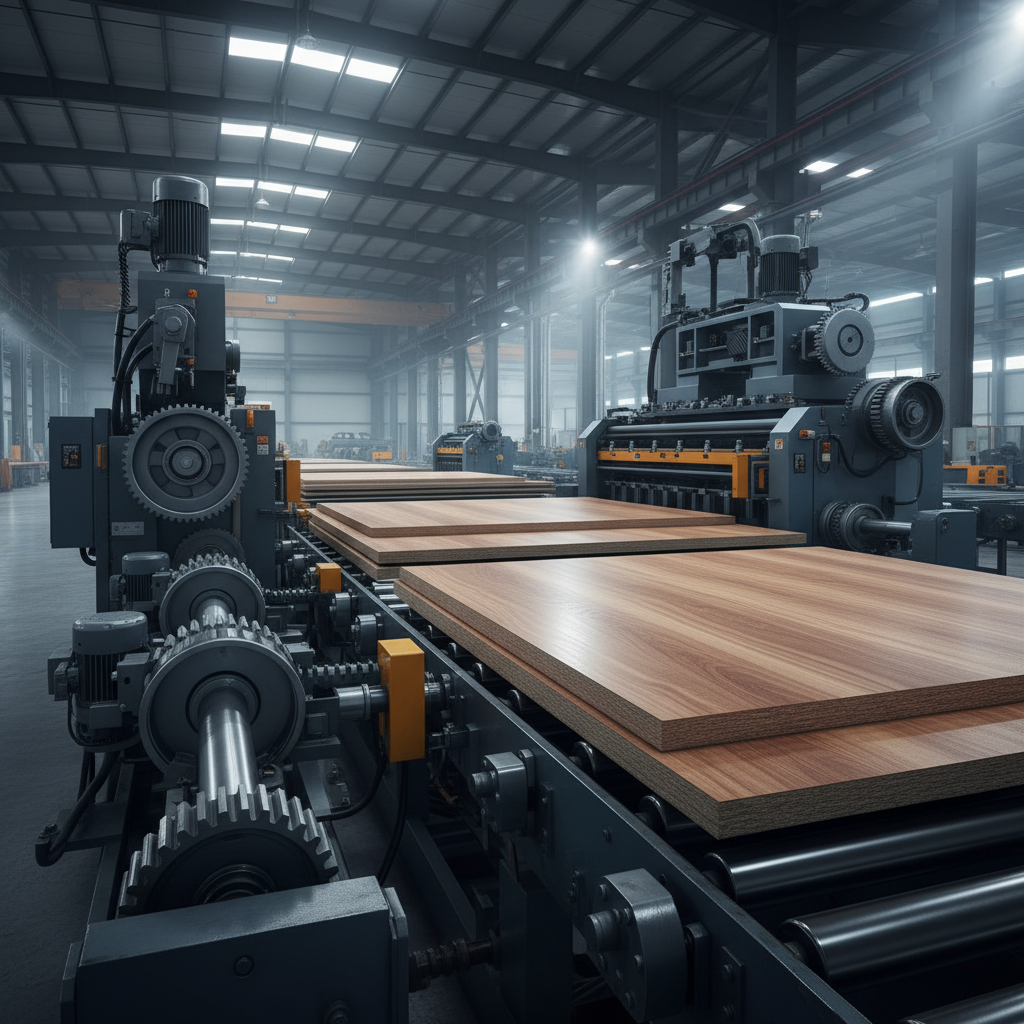
Selecting a custom mdf board requires a precise balance between structural integrity and surface aesthetics, especially within the specialized field of artificial panel manufacturing. In high-end interior architecture, the ability to customize density, finish, and curing methods determines whether a panel serves as a mere substrate or a high-performance decorative element.
Many procurement officers and designers struggle with inconsistent surface durability and the emission of volatile organic compounds in standard boards. This challenge necessitates a move toward advanced curing technologies that can provide tailored hardness and chemical resistance without compromising environmental safety standards.
This analysis provides a technical framework for evaluating custom MDF solutions, focusing on electron beam (EB) curing advantages, surface property optimization, and a practical selection matrix for residential and commercial applications.

Understanding Custom MDF Engineering Foundations

A custom mdf board is not merely a resized piece of medium-density fiberboard; it is a precision-engineered composite where the fiber density, adhesive chemistry, and surface treatment are calibrated for a specific use case. In the context of the wood processing and artificial panel industry, customization begins at the core composition, ensuring the board can withstand the intended mechanical loads and environmental stressors of its final installation.
For professional applications, customization often involves specifying the internal bond strength and the precision of the thickness tolerance. This ensures that when panels are integrated into large-scale modular furniture or architectural cladding, the alignment remains millimeter-perfect across thousands of units, reducing waste and installation time.
The Role of Electron Beam (EB) Curing in Customization
Traditional thermal curing relies on heat to evaporate solvents or trigger polymerization, which can lead to uneven surface tension and residual internal stress. In contrast, EB curing technology utilizes high-energy electron beams to bombard liquid coatings, triggering instant cross-linking to form a three-dimensional interlocked network. This process allows for a level of surface customization that thermal methods cannot match.
Hebei Bojing Technology Co., Ltd. has integrated this aerospace-grade technology to replace conventional thermal processes with precision speed. By controlling the electron accelerator's intensity and exposure time, the resulting EB panels achieve unmatched color purity and surface stability, effectively solving the industry pain point of inconsistent durability in high-traffic decorative surfaces.
Surface Performance and Aesthetic Customization
Customization of the surface layer determines the tactile and visual identity of the board. Options range from ultra-matte and soft-touch finishes to high-gloss surfaces. For instance, a "Fashion Grey" finish requires precise pigment dispersion and curing uniformity to avoid the "orange peel" effect common in lower-grade panels. The EB curing process ensures 99% curing uniformity, resulting in a flawless aesthetic across large surface areas.
Beyond color, functional customization includes enhancing the panel's resistance to fingerprints, scratches, and tarnishing. By layering the curing process, manufacturers can create a surface that is not only visually appealing but also antimicrobial and corrosion-resistant, making these boards suitable for medical environments or high-end residential kitchens.
Comparative Analysis of Surface Hardness Factors
Evaluating the effectiveness of a custom mdf board requires looking at normalized performance scores across different curing technologies. The following illustrative framework compares the relative impact of curing methods on surface hardness, scratch resistance, and chemical stability.
As indicated in the conceptual index, EB curing significantly outperforms traditional thermal and UV curing in terms of cross-linking density. This results in higher ASTM D4060 wear resistance, which is critical for commercial surfaces that encounter constant friction and cleaning agents.
Environmental Compliance and Health Safety Standards
A critical dimension of customization is the selection of emission-free materials. The shift toward formaldehyde-free and benzene-free panels is no longer optional but a requirement for pediatric and medical certifications. Advanced EB technology facilitates food-grade material compliance by eliminating the need for hazardous thermal solvents during the curing phase.
Compliance with standards such as GB/T 35607 for pediatric spaces and ISO 18562 for medical environments ensures that the custom boards contribute to a healthy indoor air quality. This focus on eco-innovation allows manufacturers to provide LEED-compliant designs that meet the stringent requirements of modern green building certifications.
Common Technical Pitfalls in Panel Specification
Many buyers make the mistake of prioritizing aesthetic color over core technical specifications. A common error is specifying a high-gloss finish without confirming the scratch resistance rating, leading to premature surface degradation. Additionally, overlooking the edge-banding compatibility of a custom EB panel can result in visible seams and moisture ingress at the joints.
Another frequent oversight is the failure to specify the required curing uniformity. Without a guaranteed uniformity rate, large-scale projects may experience slight color shifts between different batches of panels, which becomes highly apparent when installed in a single large room or corporate lobby.
Decision Framework for Custom Panel Procurement
To select the right custom mdf board, buyers should utilize a multi-dimensional evaluation matrix. The choice between EB MDF, Veneer MDF, or standard decorative panels should be based on the specific environmental stress and the required lifespan of the installation.
| Panel Type | Primary Strength | Ideal Application | Main Consideration |
|---|---|---|---|
| EB MDF Board | Surface Hardness | Medical/Pediatric | Curing Precision |
| Veneer MDF | Natural Aesthetic | Luxury Residential | Moisture Sensitivity |
| Standard MDF | Cost Efficiency | Internal Partitions | Emission Levels |
| Ultra-Matte EB | Fingerprint Resistance | High-end Kitchens | Maintenance Ease |
| High-Gloss EB | Visual Depth | Retail Displays | Scratch Sensitivity |
| Textured EB | Tactile Grip | Commercial Office | Pattern Consistency |
By aligning the panel type with the application's specific demands, procurement teams can optimize both the initial investment and the long-term maintenance costs of the interior fit-out.
Frequently Asked Questions
EB curing uses electron beams to trigger instant polymerization, creating a three-dimensional interlocked network. This results in higher surface hardness, better chemical resistance, and zero thermal deformation compared to traditional heat-based curing.
Yes, when manufactured using EB technology, panels can achieve formaldehyde-free and benzene-free emissions, meeting ISO 18562 standards for medical environments and ensuring patient and staff safety.
Buyers should request ASTM D4060 wear resistance data. A higher cross-linking density, typically achieved through EB curing, directly correlates to a lower wear rate and higher scratch resistance.
Yes, utilizing automated decorative panel lines and EB curing ensures up to 99% curing uniformity, which minimizes color deviation across mass-produced batches.
EB MDF utilizes a high-tech cured coating for extreme durability and specific colors, whereas Veneer MDF uses a thin layer of natural wood for a traditional look. EB is generally more resistant to chemicals and wear.
Yes, due to the absence of harmful solvents and low-emission profiles of EB cured panels, they are highly suitable for LEED-compliant architectural designs.
Conclusion
The evolution of the custom mdf board from a basic construction material to a high-performance architectural element is driven by advances in curing technology. By prioritizing cross-linking density and emission standards, designers can achieve a synergy of durability and health safety that meets the demands of modern commercial and medical interiors.
For those evaluating implementation options for premium decorative panels, detailed product specifications and technical capabilities can be reviewed at www.tengfeiebmdf.com to ensure the selected solution matches the application's operational requirements.