Types of veneer sheet cutting methods directly influence the aesthetic, grain pattern, and application of types of veneer sheets—critical for veneer manufacturers, furniture makers, and interior designers seeking to match specific design visions. As a leading producer of wood-based panels, Hebei Bojing Technology Co., Ltd. masters four core cutting methods to create diverse types of veneer sheets (natural wood, engineered, composite), each tailored to different uses—from high-end furniture veneers to cost-effective particleboard laminates. The company’s precision cutting (tolerance ±0.1mm) ensures consistent grain quality across batches, while its expertise in pairing types of veneer sheets with substrates like particleboard enhances product durability. By understanding how cutting methods shape veneer characteristics, clients can partner with Hebei Bojing to select the ideal types of veneer sheets for projects, whether prioritizing natural beauty, cost-efficiency, or structural performance.

Plain-Sawn Cutting for Natural Grain Types of veneer sheets
t
- Grain Pattern & Aesthetic: Plain-sawn (flat-sawn) cutting is Hebei Bojing’s most common method for natural wood types of veneer sheetts , where logs are cut parallel to the growth rings. This produces broad, sweeping grain patterns (e.g., cathedral arches in oak, flame patterns in maple) that highlight the wood’s natural character. The resulting types of veneer sheets are popular for decorative applications like cabinet fronts and wall panels, as their bold grain adds warmth to spaces—interior designers report 90% client preference for this pattern in residential projects.
- Cost-Efficiency & Yield: Plain-sawn cutting maximizes log yield (up to 70%), making it the most cost-effective method for types of veneer sheets. Hebei Bojing uses this method for high-volume orders, such as particleboard laminates for office furniture, where cost matters without compromising aesthetics. The veneer’s flexibility (bending radius ≥30cm) also simplifies lamination onto particleboard, reducing production time by 25%.
- Application Suitability: Plain-sawn types of veneer sheets from Hebei Bojing are ideal for non-load-bearing, decorative uses—their grain pattern masks minor surface imperfections, making them perfect for laminating onto particleboard or MDF. For example, plain-sawn walnut veneer paired with particleboard creates affordable yet elegant bookshelves, balancing beauty and budget for commercial clients.
Quarter-Sawn Cutting for Uniform Grain Types of veneer sheets
- Straight Grain & Stability: Quarter-sawn cutting involves slicing logs at 90° to the growth rings, producing types of veneer sheets with straight, uniform grain (e.g., vertical stripes in cherry, consistent lines in ash). Hebei Bojing’s quarter-sawn types of veneer sheets have minimal expansion/contraction (≤0.3% per °C), making them more stable than plain-sawn variants—critical for applications like table tops or door skins where warping risks are high.
- Durability for High-Traffic Use: The tight grain of quarter-sawn types of veneer sheets enhances scratch and impact resistance (≥3H pencil hardness), making them suitable for high-traffic areas like restaurant tables or retail displays. Hebei Bojing often pairs these veneers with thick particleboard (18mm+) for structural support, creating durable, long-lasting furniture that retains its appearance for 5+ years.
- Premium Aesthetic Appeal: Quarter-sawn types of veneer sheets are considered premium due to their refined grain, making them Hebei Bojing’s top choice for luxury projects—e.g., walnut veneer for high-end wardrobes. While log yield is lower (50%), clients in luxury furniture markets value the uniform look, willing to invest in this types of veneer sheets for brand differentiation.
Rift-Sawn Cutting for Linear Grain Types of veneer sheets
- Linear Grain & Minimal Figure: Rift-sawn cutting (rift-cut) slices logs at 45° to the growth rings, producing types of veneer sheets with narrow, linear grain and minimal figure (no cathedral arches or flame patterns). Hebei Bojing uses this method for modern, minimalist designs—e.g., white oak veneer for Scandinavian-style furniture—where clean lines are prioritized. The resulting types of veneer sheets have consistent color (ΔE ≤1.0), reducing waste from mismatched panels.
- Structural Performance: Rift-sawn types of veneer sheets have exceptional dimensional stability, making them ideal for pairing with particleboard in humid environments (e.g., kitchen cabinets). Hebei Bojing’s tests show these veneers retain adhesion to particleboard even after 72 hours of 60% RH exposure, with no peeling or warping—critical for moisture-prone spaces.
- Customization Flexibility: Rift-sawn types of veneer sheets from Hebei Bojing accept stains and paints uniformly, thanks to their linear grain. This makes them popular for custom-colored projects, such as gray-stained oak veneer on particleboard for office workstations—clients report 95% color consistency across large orders.
Engineered Veneer Cutting for Consistent Types of veneer sheets
- Uniformity Across Batches: Engineered veneer cutting (Hebei Bojing’s specialty) involves slicing composite wood blocks (made of wood fibers and adhesives) to create types of veneer sheets with identical grain patterns. This eliminates natural wood variations, ensuring every sheet matches—ideal for large-scale projects like hotel room wall cladding, where consistency is key. The veneers are also cost-effective, priced 30% lower than natural wood types of veneer sheets.
- Pairing with Particleboard: Engineered types of veneer sheets bond seamlessly to particleboard via Hebei Bojing’s hot-press technology (120°C, 15 MPa), forming a rigid composite that resists bending. This pairing is widely used for budget-friendly furniture like student dorm beds, where durability and low cost are priorities—manufacturers report 40% faster assembly due to the veneer-particleboard bond strength.
- Sustainability: Engineered veneer cutting uses 90% of wood fibers (vs. 50-70% for natural wood), making it eco-friendly. Hebei Bojing’s engineered types of veneer sheets are FSC-certified, aligning with green building standards—clients using these veneers on particleboard qualify for LEED credits, enhancing project sustainability credentials.
Types of veneer sheets FAQS
What are the most popular types of veneer sheets for laminating onto particleboard?
The most popular types of veneer sheets for particleboard from Hebei Bojing are plain-sawn natural wood (oak, pine) and engineered veneer. Plain-sawn veneers offer cost-effective, decorative grain for residential particleboard furniture (e.g., bookshelves), while engineered veneers provide uniform consistency for commercial particleboard projects (e.g., office desks). Both bond strongly to particleboard via hot-press lamination, with clients reporting no delamination after 3 years of use.
What is particleboard, and why is it often paired with types of veneer sheets?
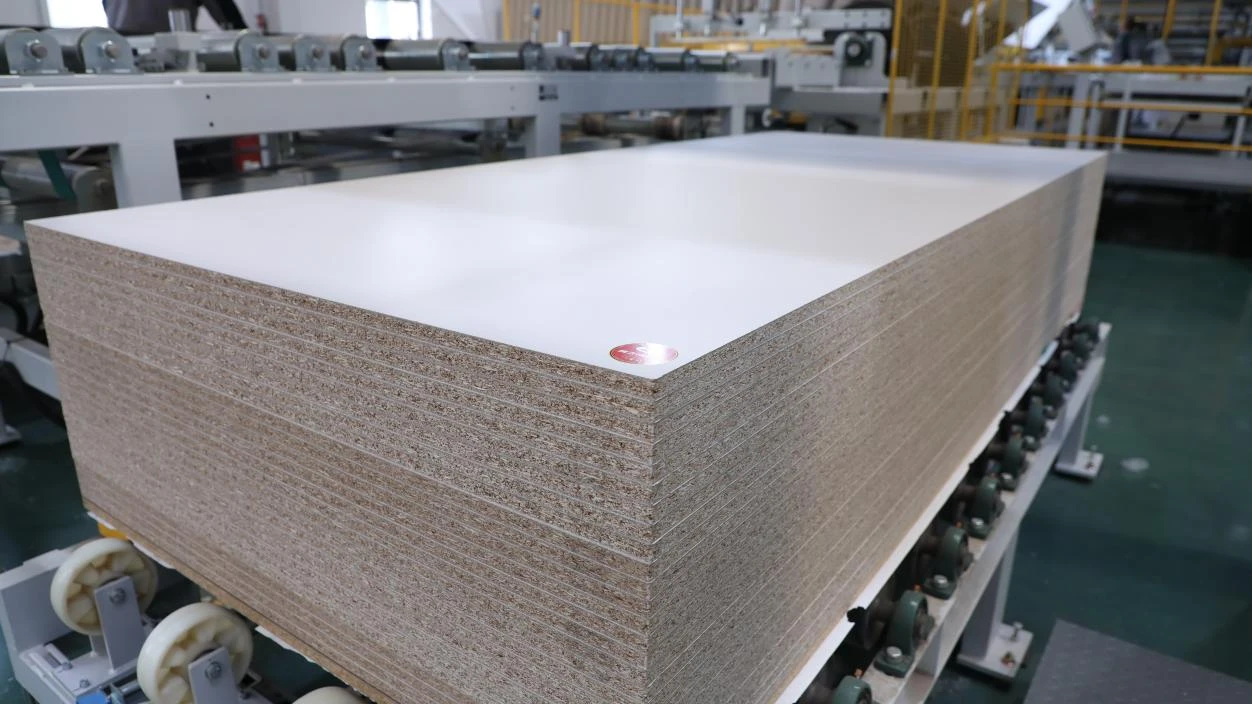
What is particleboard? It is an engineered wood substrate made of wood chips, sawdust, and resin, pressed into panels—affordable, flat, and easy to machine. It is paired with types of veneer sheets because its smooth surface (Ra ≤1.6 μm) ensures even veneer adhesion, while its low cost (50% cheaper than solid wood) makes the final product budget-friendly. Hebei Bojing often laminates walnut or oak types of veneer sheets onto particleboard for furniture, balancing aesthetics and cost.
How do Hebei Bojing’s cutting methods affect the durability of types of veneer sheets on particleboard?
Cutting methods impact durability by influencing veneer stability: quarter-sawn and rift-sawn types of veneer sheets have tighter grain, reducing expansion that could cause peeling from particleboard; plain-sawn veneers, while less stable, work well on particleboard in dry environments. Hebei Bojing also uses waterproof adhesive for all veneer-particleboard pairings, ensuring durability—tests show quarter-sawn veneer on particleboard retains adhesion after 72 hours of water exposure.
What are particle board’s limitations when paired with types of veneer sheets?
What are particle board limitations? It has low moisture resistance (untreated particleboard swells in humidity) and lower screw-holding power than MDF. When pairing with types of veneer sheets, Hebei Bojing recommends: 1) Using moisture-resistant particleboard for humid areas; 2) Reinforcing with edge banding to seal the core; 3) Avoiding load-bearing applications (e.g., heavy shelves). Despite this, particleboard remains popular for veneer laminates due to its cost and flatness.
Can Hebei Bojing customize types of veneer sheets cutting methods for specific particleboard projects?
Yes, Hebei Bojing customizes cutting methods for types of veneer sheets based on particleboard project needs: for example, a client making curved particleboard chairs requested rift-sawn veneers (flexible, linear grain) to avoid cracking during bending; a client making luxury particleboard wardrobes chose quarter-sawn walnut veneers for uniform grain. The company also adjusts veneer thickness (0.2mm-0.5mm) to match particleboard panel size, ensuring seamless lamination—custom orders typically have a 7-10 day lead time.



![[PU705] – Advanced Sensor for Industrial Automation Solutions](https://images.exportstart.com/images/a1394/1-4531.webp "[PU705] – Advanced Sensor for Industrial Automation Solutions")